
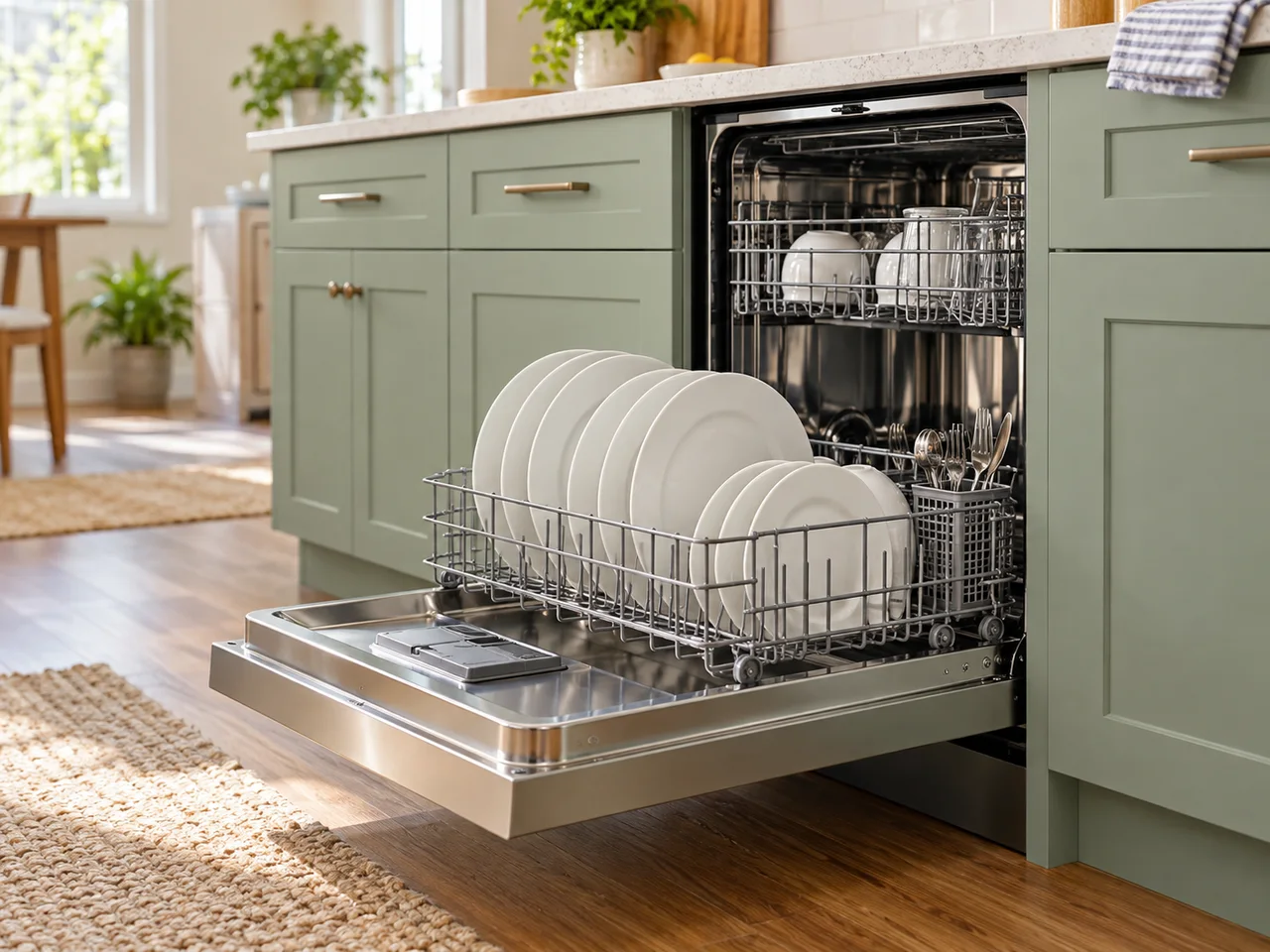
Start with the symptom
Standing water, poor washing and a leak are different clues. Start with the cycle stage and the full model number.
What are you noticing?
- Water remains after a completed cycle
- Door corners or the base are leaking
- One rack is not cleaning properly
- A fill, drain or flood-protection message
Describe what remains after the cycle
Tell the provider whether the dishwasher stops early or completes with a poor result. Record the amount and appearance of retained water, any display message and whether the concern affects both racks. Some models retain a small amount below the visible filter area; the model instructions help distinguish that from an unsuccessful drain.
Connect a leak with the operating stage
A leak during filling, washing and draining can involve different systems. Mention a recent detergent change, foam, sink work or disposal installation. Do not repeatedly run a leaking machine or tilt it to clear flood protection. Describe accessible observations rather than attempting internal pump, valve or wiring work.
Agree on access and verification
Integrated panels, floor height and surrounding cabinets can affect removal. Ask whether moving and reinstating the machine are included. A useful proposal explains the finding, parts, labor and any exclusions, followed by an appropriate operating or leak check for the agreed work.
Ask what is included
The written scope should identify the actual provider, diagnosis, proposed part and labor. Confirm the diagnostic charge, any fee credit, access work, exclusions and the conditions for additional approval. Ask what operating or safety check will verify the agreed work. Prime does not promise a stocked part, same-day attendance or a particular repair warranty.